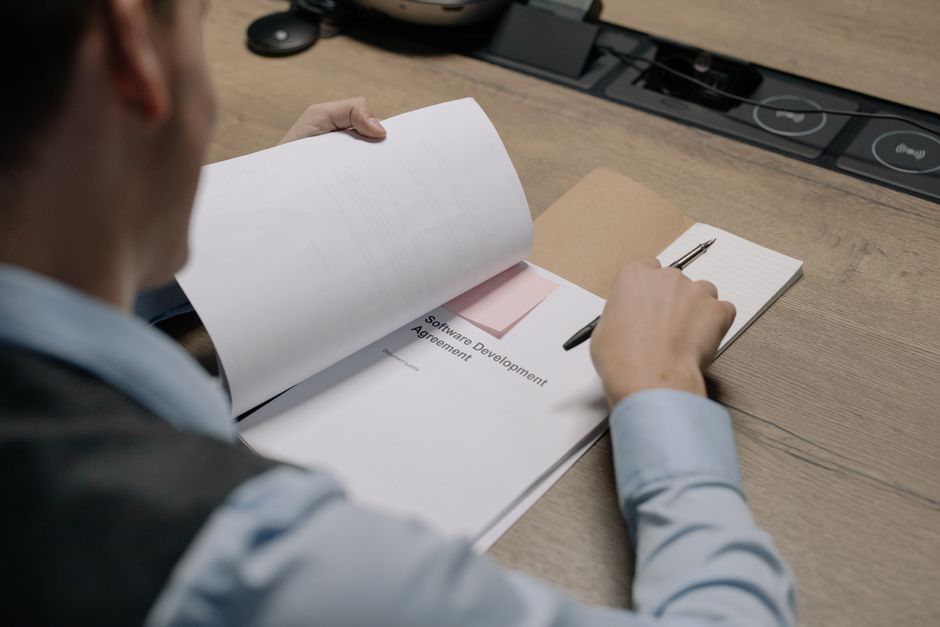
Most people assume that if it isn’t in writing, it isn’t a contract. Courts disagree — regularly. Verbal agreements carry real legal weight in most states, and a surprising number of disputes over unwritten deals end up enforced by judges who never saw a single signature.
This is not legal advice — consult a licensed attorney for guidance on your specific situation.
The Four Elements That Make a Verbal Contract Enforceable
A contract — written or spoken — needs four things to be enforceable under standard contract law. Courts in most U.S. states apply the same analysis whether the deal was signed in ink or made over the phone. The form doesn’t change the formula.
Offer and Acceptance
One party makes a clear offer; the other accepts unambiguously. “I’ll pay you $500 to paint my living room” followed by “deal” is an offer and acceptance. Vague statements like “we should work together sometime” don’t meet the standard. Specificity matters — courts want to see that both sides understood what they were agreeing to.
Consideration
Both sides must exchange something of value. Money, a service, a promise to act, or even a promise to refrain from something all qualify. Without mutual consideration, courts typically treat the arrangement as a gift — not a contract. This is why promises of inheritance or goodwill gestures generally can’t be enforced.
Mutual Assent
The classic Virginia case Lucy v. Zehmer (1954) settled this standard sharply. Two men negotiating over farmland — one claimed he was joking. The court disagreed. It held that contract law looks at outward behavior, not internal intent. If you acted like you agreed, a court will likely find that you agreed. That principle has been cited in hundreds of subsequent decisions across the country.
Capacity and Legality
Both parties must be legally able to contract — generally adults of sound mind. And the subject matter must be legal. A verbal agreement to sell stolen property isn’t enforceable for obvious reasons. Contracts involving minors face special scrutiny and are typically voidable by the minor’s side.
All four elements apply identically whether the contract is verbal or written. Courts in California, New York, and Texas have consistently applied these elements to uphold verbal agreements in commercial and personal disputes alike. The absence of a written document doesn’t erase the legal obligation — it just makes it harder to prove.
When Verbal Contracts Cannot Be Enforced

There’s a hard exception. The Statute of Frauds — a doctrine tracing back to English law in 1677, now adopted in every U.S. state — requires specific contract types to be in writing to be enforceable at all. No writing, no case. Period.
| Contract Type | Writing Required? | Key Notes |
|---|---|---|
| Sale of real estate | Yes | Includes land purchases; leases over 1 year |
| Contracts lasting more than 1 year | Yes | Only if it cannot possibly be completed within 12 months |
| Sale of goods over $500 | Yes | Governed by UCC § 2-201; applies in all states |
| Prenuptial agreements | Yes | All states require written form |
| Promises to pay another person’s debt | Yes | Called a “surety” or “guaranty” agreement |
| Service contracts under $500 | No | Verbal typically enforceable |
| Personal loans between individuals | No (but risky) | Verbal loans are valid; proof is the problem |
| Employment offers | No | Courts have upheld verbal job offers in most states |
One important exception exists: part performance. In real estate, when one party has substantially completed their side of the deal — paid a deposit, made improvements, taken possession — courts in states like Illinois and Florida have sometimes enforced verbal real estate agreements despite the writing requirement. It’s narrow, but it’s real.
How Courts Evaluate Verbal Contract Disputes
Do witnesses matter in these cases?
Significantly. A credible witness who heard the agreement being made can shift a case entirely. Courts weigh witness consistency, neutrality, and any possible bias toward one party. A neutral third party — a colleague, a neighbor who overheard a phone call — typically carries more weight than a spouse or business partner. If you regularly make verbal agreements in business, having someone present isn’t just good practice. It’s potential evidence.
Can texts and emails prove a verbal contract existed?
Courts have routinely admitted text messages, emails, and even WhatsApp messages as evidence confirming verbal agreements. If you texted “sounds good, starting Monday” after a verbal deal, that message helps establish that an agreement existed. Courts in New York and California have applied the concept of “partial written confirmation” — where follow-up communications corroborate what was said verbally. The written record doesn’t need to capture every term; it just needs to show the agreement was real.
What about straight “he said / she said” situations?
These are genuinely the hardest cases. When there’s no documentation and no witnesses, courts evaluate credibility — consistency of story, demeanor on the stand, and whether the account makes logical sense given surrounding facts. Most straight credibility contests settle before trial because neither side wants to gamble on a jury’s read of two conflicting testimonies. In most states, the burden of proving the contract’s existence rests on the party claiming it existed.
Four Mistakes That Sink Verbal Contract Claims

- Assuming no paper means no contract. If you performed services, delivered goods, or paid money based on a verbal agreement, you likely have a claim. Many people walk away from legitimate disputes because they believe a signature was required.
- Not following up in writing after the conversation. Sending an email that says “confirming our agreement from Tuesday — you’ll pay $2,000 for the website by March 1” creates a paper trail at zero cost. If the other party doesn’t object, that email strengthens your position considerably in court.
- Waiting too long. Statutes of limitations apply to verbal contract claims. In California, you typically have 2 years to file on an oral contract. New York gives 6 years. Most states fall in the 3–6 year range, but the clock starts at breach — not when you decide to act.
- Confusing informal with unenforceable. A handshake deal at a restaurant can be a contract. A promise made over the phone can be a contract. Courts don’t require formal settings, formal language, or even the word “contract.”
What Evidence Actually Wins Verbal Contract Cases
Verbal contract claims that succeed almost always rest on more than one person’s word. That’s the honest picture.
The most useful evidence, roughly ranked by how much weight courts tend to give it:
- Written follow-ups — emails, texts, invoices — referencing the verbal deal
- Partial performance: work completed, money paid, goods delivered
- Neutral eyewitness testimony
- Prior course of dealing between the parties (same arrangement worked before)
- Bank records or payment receipts consistent with the alleged terms
- Industry custom — what a reasonable person in that trade would expect
In practice, courts handling construction and service disputes have consistently upheld verbal contracts worth tens of thousands of dollars when partial performance was clear — completed work, paid installments, signed delivery receipts — even where no written agreement existed. The work itself became evidence of the agreement.
Documenting what happens after the verbal agreement often matters more than documenting the agreement itself. A series of payments, invoices sent without objection, or services accepted without complaint can build a compelling record.
Verbal vs. Written Contracts: The Core Differences

The legal validity is often the same. The practical difference is almost entirely about proof — and about cost when things go wrong.
| Factor | Verbal Contract | Written Contract |
|---|---|---|
| Legal enforceability | Valid in most cases | Valid in all cases (if properly executed) |
| Ease of proof in court | Difficult — relies on testimony and circumstantial evidence | Straightforward — the document speaks for itself |
| Required for Statute of Frauds categories | No — unenforceable | Yes — required by law |
| Dispute cost | Higher — more discovery, more testimony needed | Lower — terms are typically defined |
| Risk of disagreement over terms | High | Lower (unless ambiguous language) |
| Statute of limitations (typical range) | 2–6 years by state | 4–10 years by state |
Verbal contracts are real. They’re just fragile. The law recognizes them — but enforcing one without documentation is costly, uncertain, and slow. If you’re involved in a dispute over a verbal agreement, the question isn’t whether you have a case. It’s whether you can prove one.
This is not legal advice. Laws vary significantly by state and jurisdiction. Consult a licensed attorney before taking action on any contract dispute.
Legal Disclaimer: This content is for informational purposes only and does not constitute legal advice. Laws vary by state and individual circumstances differ. Consult a licensed attorney in your jurisdiction before making legal decisions.